This brief statement does not disclose all of the risks and other significant
aspects of trading in futures and options. In light of the risks, you
should undertake such transactions only if you understand the nature of
the contracts (and contractual relationships) into which you are entering
and the extent of your exposure to risk. Trading in futures and options
is not suitable for many members of the public. You should carefully consider
whether trading is appropriate for you in light of your experience, objectives,
financial resources and other relevant circumstances.
Futures
1. Effect of Leverage or Gearing
Transactions in futures carry a high degree of risk. The amount of initial
margin is small relative to the value of the futures contract so that
transactions are "leveraged" or "geared." A relatively
small market movement will have a proportionately larger impact on the
funds you have deposited or will have to deposit: this may work against
you as well as for you. You may sustain a total loss of initial margin
funds and any additional funds deposited with the firm to maintain your
position. If the market moves against your position or margin levels are
increased, you may be called upon to pay substantial additional funds
on short notice to maintain your position. If you fail to comply with
a request for additional funds within the time prescribed, your position
may be liquidated at a loss and you will be liable for any resulting deficit.
2. Risk-reducing orders or strategies
The placing of certain orders (e.g. "stop-loss" orders, where
permitted under local law, or "stop-limit" orders) which are
intended to limit losses to certain amounts may not be effective because
market conditions may make it impossible to execute such orders. Strategies
using combinations of positions, such as "spread" and "straddle"
positions may be as risky as taking simple "long" or "short"
positions.
Options
3. Variable degree of risk
Transactions in options carry a high degree of risk. Purchasers and sellers
of options should familiarize themselves with the type of option (i.e.
put or call) which they contemplate trading and the associated risks.
You should calculate the extent to which the value of the options must
increase for your position to become profitable, taking into account the
premium and all transaction costs.
The purchaser of options may offset or exercise the options or allow the
options to expire. The exercise of an option results either in a cash
settlement or in the purchaser acquiring or delivering the underlying
interest. If the option is on a future, the purchaser will acquire a futures
position with associated liabilities for margin (see the section on futures
above). If the purchased options expire worthless, you will suffer a total
loss of your investment which will consist of the option premium plus
transaction costs. If you are contemplating purchasing deep-out-of the-money
options, you should be aware that the chance of such options becoming
profitable ordinarily is remote.
Selling ("writing" or "granting") an option generally
entails considerably greater risk than purchasing options. Although the
premium received by the seller is fixed, the seller may sustain a loss
well in excess of that amount. The seller will be liable for additional
margin to maintain the position if the market moves unfavorably. The seller
will also be exposed to the risk of the purchaser exercising the option
and the seller will be obligated to either settle the option in cash or
to acquire or deliver the underlying interest. If the option is on a future,
the seller will acquire a position in a future with associated liabilities
for margin (see the section on Futures above). If the option is "covered"
by the seller holding a corresponding position in the underlying interest
or a future or another option, the risk may be reduced. If the option
is not covered, the risk of loss can be unlimited.
Certain exchanges in some jurisdictions permit deferred payment of the
option premium, exposing the purchaser to liability for margin payments
not exceeding the amount of the premium. The purchaser is still subject
to the risk of losing the premium and transaction costs. When the option
is exercised or expires, the purchaser is responsible for any unpaid premium
outstanding at that time.
Additional risks common to futures and options
4. Terms and conditions of contracts
You should ask the firm with which you deal about the terms and conditions
of the specific futures or options which you are trading and associated
obligations (e.g., the circumstances under which you may become obligated
to make or take delivery of the underlying interest of a futures contract
and, in respect to options, expiration dates and restrictions on the time
for exercise). Under certain circumstances the specifications of outstanding
contracts (including the exercise price of an option) may be modified
by the exchange or clearing house to reflect changes in the underlying
interest.
5. Suspension or restriction of trading and pricing relationships
Market conditions (e.g. illiquidity) and/or the operation of the rules
of certain markets (e.g. the suspension of trading in any contract or
contract month because of price limits or "circuit breakers")
may increase the risk of loss by making it difficult or impossible to
effect transactions or liquidate/offset positions. If you have sold options,
this may increase the risk of loss.
Further, normal pricing relationships between the underlying interest
and the future, and the underlying interest and the option may not exist.
This can occur when, for example, the futures contract underlying the
option is subject to price limits while the option is not. The absence
of an underlying reference price may make it difficult to judge fair value.
6. Deposited cash and property
You should familiarize yourself with the protections accorded money or
other property you deposit for domestic and foreign transactions, particularly
in the event of a firm insolvency or bankruptcy. The extent to which you
may recover your money or property may be governed by specific legislation
or local rules. In some jurisdictions, property which had been specifically
identifiable as your own will be pro-rated in the same manner as cash
for purposes of distribution in the event of a shortfall.
7. Commission and other charges
Before you begin to trade, you should obtain a clear explanation of all
commission, fees and other charges for which you will be liable. These
charges will affect your net profit (if any) or increase your loss.
8. Transactions in other jurisdictions
Transactions on markets in other jurisdictions, including markets formally
linked to a domestic market, may expose you to additional risk. Such markets
may be subject to regulation which may offer different or diminished investor
protection. Before you trade you should inquire about any rules relevant
to your particular transactions. Your local regulatory authority will
be unable to compel the enforcement of the rules of regulatory authorities
or markets in other jurisdictions where your transactions have been effected.
You should ask the firm with which you deal for details about the types
of redress available in both your home jurisdiction and other relevant
jurisdictions before you start to trade.
9. Currency risks
The profit or loss in transactions in foreign currency denominated contracts
(whether they are traded in your own or another jurisdiction) will be
affected by fluctuations in currency rates where there is a need to convert
from the currency denomination of the contract to another currency.
10. Trading facilities
Most open-outcry and electronic trading facilities are supported by computer-based
component systems for the order routing, execution, matching, registration
or clearing of trades. As with all facilities and systems, they are vulnerable
to temporary disruption or failure. Your ability to recover certain losses
may be subject to limits on liability imposed by the system provider,
the market, the clearinghouse and/or member firms. Such limits may vary,
you should ask the firm with which you deal for details in this respect.
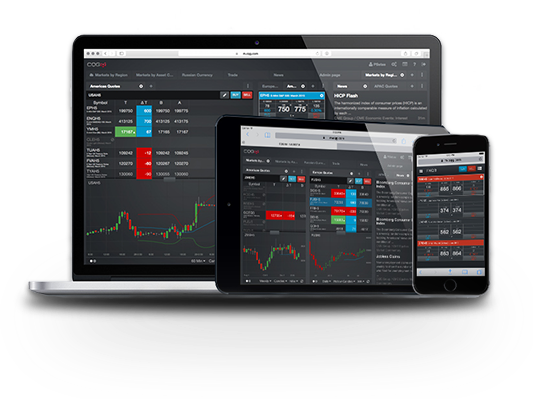
11. Electronic trading
Trading on an electronic trading system may differ not only from trading
in an open-outcry market but also from trading on other electronic trading
systems. If you undertake transactions on an electronic trading system,
you will be exposed to risks associated with the system including the
failure of hardware and software. The result of any system failure may
be that your order is either not executed according to your instructions
or is not executed at all.
12. Off-exchange transactions
In some jurisdictions, and only then in restricted circumstances, firms
are permitted to effect off-exchange transactions. The firm with which
you deal may be acting as your counterparty to the transaction. It may
be difficult or impossible to liquidate an existing position, to assess
the value, to determine a firm price or to assess the exposure to risk,
For these reasons, these transactions may involve increased risks. Off-exchange
transactions may be less regulated or subject to a separate regulatory
regime. Before you undertake such transactions, you should familiarize
yourself with applicable rules and attendant risks.